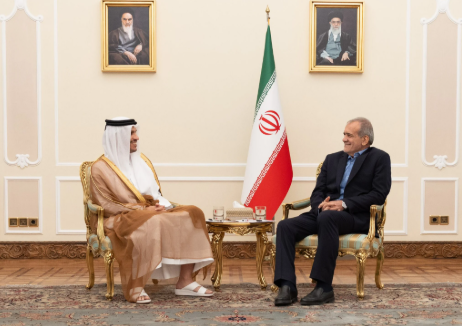
Qatar has continued to act as a back-channel mediator between the warring sides and played a key role in brokering a ceasefire in June that temporarily halted hostilities.
Qatari Prime Minister and Foreign Minister Sheikh Mohammed bin Abdulrahman Al Thani held talks with Iranian Foreign Minister Abbas Araghchi in Tehran, Iran’s Foreign Ministry said.
According to Qatar’s Foreign Ministry, the two officials discussed a proposed phased framework that includes establishing a temporary joint Iranian-Omani shipping corridor through the Strait of Hormuz and launching a joint mine-clearance project in the waterway.
The ministers also reviewed regional developments, efforts to ease tensions and measures aimed at creating conditions for renewed dialogue, the Qatari ministry said.
Sheikh Mohammed’s visit came as the White House maintained that no negotiations were currently taking place between the United States and Iran, saying Tehran had yet to “come to the table in a meaningful way”.
Iran, however, has repeatedly maintained that it has never withdrawn from negotiations.
White House press secretary Karoline Leavitt said on Thursday that President Donald Trump continued to keep “all options on the table” regarding Iran.
Meanwhile, Iranian Parliament Speaker Mohammad Baqer Ghalibaf called for national unity in response to what he described as an “all-out economic war”, warning that internal divisions were “exactly what the enemy wants”.
Ebrahim Azizi, chairman of the Iranian parliament’s national security committee, described the US sanctions as an “inhumane and hostile act”, but said they had become less effective.
Iran has faced various forms of US sanctions since the 1979 Islamic Revolution.
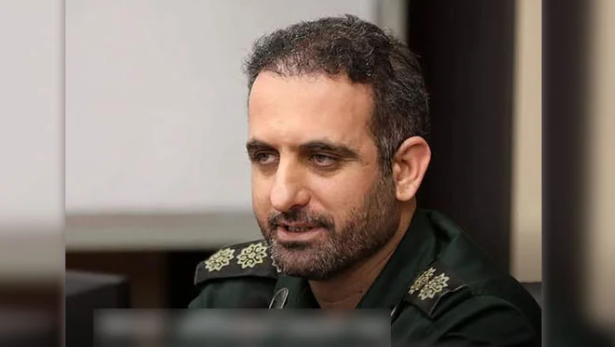
On Wednesday, Iran’s Islamic Revolutionary Guard Corps said Tehran and Muscat had agreed on arrangements for sharing the Strait of Hormuz and its revenues. However, a senior Iranian official later said the two sides were still finalising the details of the agreement.