Pakistan, Egypt, Saudi Arabia and Türkiye have held high-level discussions with France, Germany, Italy and the United Kingdom in Istanbul to address escalating tensions in the Gulf, regional security challenges and diplomatic efforts to prevent further conflict in the Middle East.
Deputy Prime Minister and Foreign Minister Ishaq Dar participated in the first meeting between the four-nation R4 group and the European powers, according to Pakistan’s Foreign Office (FO).
The R4 framework, established in March, focuses on regional security and mediation efforts between the United States and Iran. During the meeting, participants exchanged views on developments in the Gulf, their social and economic consequences, and the urgent need for diplomatic engagement to address regional challenges.
Dar briefed his counterparts on Pakistan’s ongoing diplomatic efforts to reduce tensions, prevent renewed hostilities and promote peace. The ministers agreed to maintain engagement through the new diplomatic framework.
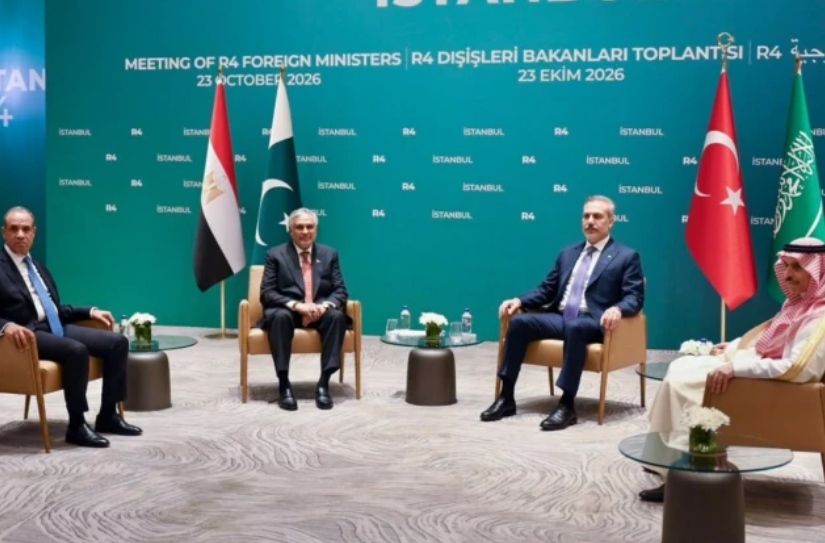
In a separate meeting, Dar joined Turkish Foreign Minister Hakan Fidan, Egyptian Foreign Minister Badr Abdelatty and Saudi Foreign Minister Prince Faisal bin Farhan Al Saud for the sixth R4 foreign ministers’ meeting.
The ministers reviewed developments since their previous meeting in New York in September, focusing on the Middle East, regional conflicts and emerging security threats.
They expressed solidarity with Saudi Arabia and reaffirmed their support for its sovereignty and territorial integrity. The ministers also condemned Houthi attacks targeting Saudi Arabia and called for respect for state sovereignty.
A joint statement condemned attacks on civilians and civilian infrastructure in Saudi Arabia, as well as assaults on commercial shipping in the Red Sea and the Bab al-Mandab Strait. The ministers urged Yemen’s Houthi movement to halt military operations, threats and attacks and return to the political process in good faith.
The ministers stressed that the conflict involving the United States and Iran must be addressed through dialogue and diplomacy. They also called for the protection of civilians, civilian infrastructure and commercial vessels.
The group expressed support for the Islamabad Memorandum of Understanding and welcomed ongoing diplomatic initiatives aimed at preventing further escalation and achieving a lasting negotiated settlement.
Freedom of navigation and maritime security were identified as critical priorities. The ministers warned that disruptions to major shipping routes could threaten global supply chains and the movement of energy, fertilisers and food, with serious consequences for vulnerable populations.
They rejected restrictions on lawful maritime navigation and called for the swift restoration of safe and uninterrupted passage through the Strait of Hormuz. The participants also agreed to maintain close consultation and coordination on regional security matters.
The joint statement described Israel’s occupation of Gaza as a fundamental source of instability in the region and called for progress towards a two-state solution in accordance with relevant United Nations resolutions.
The ministers reaffirmed the Palestinian people’s right to self-determination and the establishment of an independent, sovereign and viable Palestinian state based on the June 4, 1967 lines, with East Jerusalem as its capital.
They called for an end to Israeli violence, measures aimed at changing Jerusalem’s legal and historical status, settlement expansion in the occupied West Bank and East Jerusalem, and violence by Israeli settlers against Palestinians.
The statement also emphasised the need for uninterrupted humanitarian assistance and reconstruction in Gaza to address the ongoing humanitarian crisis.
On the sidelines of the Istanbul meetings, Dar held separate discussions with his Turkish, Egyptian and Saudi counterparts, as well as Germany’s Foreign Minister Johann Wadephul.
During his meeting with Fidan, Dar thanked Türkiye for hosting the discussions and exchanged views on bilateral relations and regional developments, particularly the situations in the Middle East and Palestine.
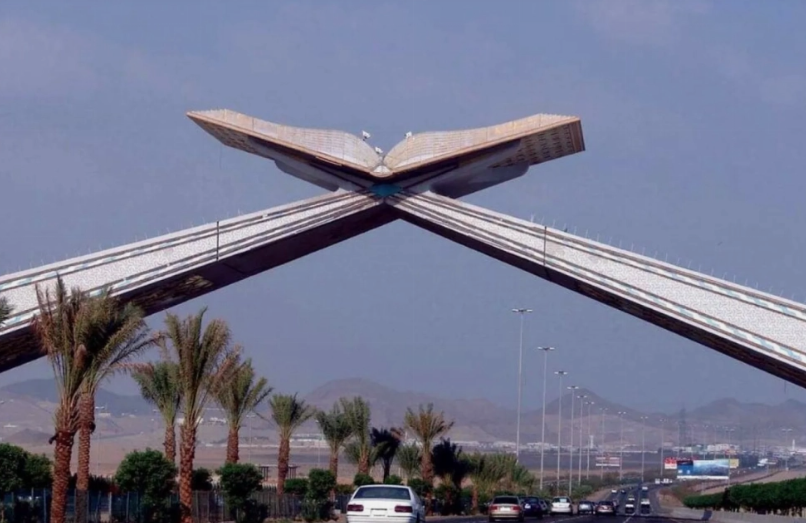
Both ministers condemned Houthi attacks on Saudi Arabia and stressed the importance of diplomatic engagement and coordinated regional efforts. They also reaffirmed their commitment to strengthening cooperation under the Makkah Defence Agreement.
Dar and Abdelatty discussed developments in Palestine and the wider Middle East, agreeing to maintain diplomatic consultations and expand bilateral cooperation in trade, agriculture, pharmaceuticals, renewable energy, defence, connectivity and business partnerships.
In his meeting with Prince Faisal bin Farhan, Dar reiterated Pakistan’s support for Saudi Arabia’s sovereignty and territorial integrity. Both sides reaffirmed their commitment to strengthening their strategic partnership through regular consultations and cooperation on regional security.
The ministers also highlighted their defence cooperation under the bilateral Strategic Mutual Defence Agreement and the Makkah defence framework involving Pakistan, Türkiye and Saudi Arabia.
During his meeting with German Foreign Minister Johann Wadephul, Dar discussed bilateral relations and regional and international developments. He welcomed Germany’s engagement, alongside France, Italy and the UK, with the R4 framework and stressed the importance of continued diplomatic coordination.
British Foreign Secretary Ed Miliband’s office said the discussions would focus on the Strait of Hormuz and the security situation in Saudi Arabia. Miliband was expected to advocate a diplomatic resolution to the crisis and the restoration of full freedom of navigation.
The British side also raised concerns that attacks across the region could increase pressure on strategic maritime routes, including Bab al-Mandab and the Suez Canal.
France described the meeting as a first in this format and said it aimed to strengthen coordination between European and Middle Eastern countries amid regional instability.
Türkiye was also expected to emphasise the need for a diplomatic solution to the US-Iran conflict, secure navigation through the Strait of Hormuz and Bab al-Mandab, and support for Saudi Arabia’s security.
The discussions come amid growing concerns over regional escalation and threats to vital international shipping routes.
The Makkah defence agreement, signed on August 7 by Pakistan, Türkiye and Saudi Arabia, aims to strengthen collective deterrence and defence cooperation among the participating countries.
The framework seeks to enhance coordination on security challenges and reinforce the principle that an attack against one signatory should be treated as an attack against all.
The Istanbul meetings reflect growing efforts by regional and European powers to coordinate diplomatic initiatives, protect maritime trade and prevent further escalation across the Middle East.