The US military has launched a programme to develop and install small nuclear reactors to ensure a continuous supply of electricity to remote military bases.
According to the US Army, contracts worth up to $2.2 billion in total have been awarded to five companies to develop and operate small nuclear reactors at military installations.
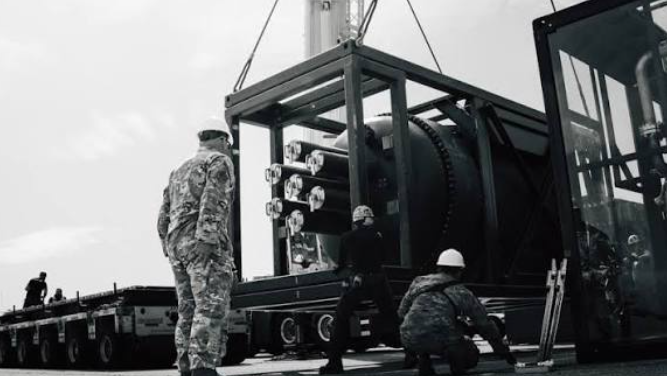
Known as microreactors, the compact nuclear plants can be manufactured in factories, transported relatively easily from one location to another and generate up to 20 megawatts of electricity each.
The US Army said the reactors, being developed under the “JANUS” programme, could eventually provide power to military bases in remote locations, including Alaska and distant islands, where supplying electricity is difficult and expensive. The programme aims to install its first reactor by September 2028.
The companies and military bases selected for the programme include Antares Nuclear at Fort Bragg in North Carolina, BWXT Advanced Technologies at Fort Campbell in Kentucky, General Atomics Electromagnetic Systems at Fort Hood in Texas, Radiant Industries at Fort Benning in Georgia and Westinghouse Government Services at Fort Drum in New York.
The US Army has not disclosed the amount awarded to each company. However, Radiant Industries said it could receive up to $750 million to manufacture and install 15 units of its “Kaleidos” reactors under the programme.
US military officials said the reactors would have to comply with all environmental and safety regulations applicable to commercial nuclear power plants. However, they would be overseen by the US Army rather than the US Nuclear Regulatory Commission.
Officials said the programme also aims to develop a commercial model that could eventually be used beyond military applications.
Critics of microreactors argue that they could prove more expensive than conventional nuclear power plants.
Military officials have acknowledged that microreactors are not expected to cost less than traditional plants, but said the JANUS programme would explore ways to reduce production costs.
The US Army said supplying electricity to military installations in Arctic regions currently costs around 40 cents per kilowatt-hour, and reducing this expense is one of the programme’s key objectives.
Mike Start, chief commercial officer at Radiant Industries, said the company’s containerised reactors could be delivered directly to customers, eliminating electricity transmission costs and potentially reducing the cost of supplied power to around 20 to 30 cents per kilowatt-hour.