
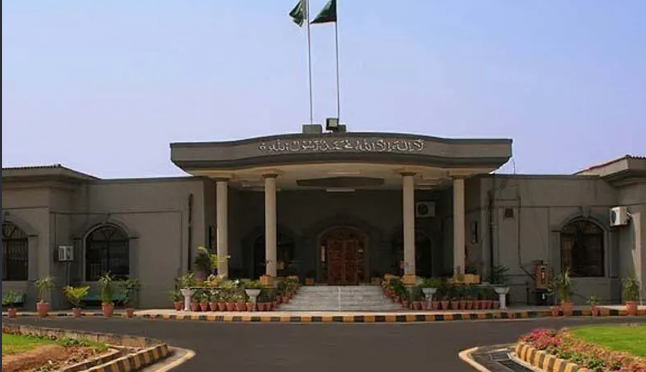
Justice Muhammad Asif reserved the verdict after hearing arguments from the petitioners’ counsel, Advocate General Islamabad Naveed Hayat Malik, Punjab Advocate General Barrister Zafarullah and jail authorities.
The petitions were filed by Adiala jail inmates Owais Altaf, Ilyas Khan and Muhammad Ismail, seeking permission to receive treatment at private hospitals on the grounds that the required medical facilities were not available at government hospitals. They also sought permission to communicate with their families through WhatsApp calls.
The petitions were filed after the Supreme Court, in its Aug 18 order, directed authorities to shift PTI founder Imran Khan to a private hospital for medical examination and treatment. Subsequently, three other Adiala inmates approached the Islamabad High Court seeking similar relief.
During Thursday’s hearing, the petitioners’ counsel told the court that one of the inmates was suffering from a serious bleeding disorder and had developed internal bleeding in the large intestine, which could be life-threatening.
The lawyer said the prisoner had been incarcerated for around six months and had repeatedly been taken to hospital for treatment. He argued that if the required treatment was unavailable in prison or government hospitals, the inmate should be shifted to a private facility.
The counsel further argued that the Supreme Court’s order remained in force and could not be interpreted as applying only to Imran Khan. He maintained that prisoners were also citizens and were entitled to equal treatment under the law.
“Why can the relief given by the Supreme Court not be extended to a common prisoner?” the counsel asked.
According to the arguments, petitioner Muhammad Ismail is an undertrial prisoner who has spent around six months in jail and suffers from a heart condition. His lawyer alleged that the Adiala jail superintendent had rejected his request for treatment without consulting a doctor.
Barrister Zafarullah said the authorities would act in accordance with the law and prison rules.
The judge observed that the petitions involved two separate matters: medical treatment and communication with relatives. On the issue of treatment, the Punjab law officer opposed the request to shift the three inmates to private hospitals.
Justice Asif, however, cautioned the authorities against compromising a prisoner’s health, observing that they could not “play with the illness of a prisoner”.
The court also considered the inmates’ request to communicate with their families through WhatsApp. Justice Asif questioned what legal provision prevented a prisoner from speaking to family members.
The Punjab advocate general responded that prison rules allowed calls to people residing in Pakistan, while exceptional circumstances could be considered where a disease could not be treated at a government hospital.