Recent diplomatic visits to Tehran by Pakistan’s Chief of Defence Forces Field Marshal Asim Munir and Omani Foreign Minister Badr Al-Busaidi have raised hopes of renewed efforts to ease tensions between Iran and the United States.
While no major breakthrough has been announced and significant differences remain, the diplomatic activity has brought negotiations and technical arrangements for de-escalation back into focus.
Washington also appears open to discussing sanctions relief as part of a broader agreement with Tehran, provided Iran meets certain conditions.
According to US media reports, Washington has offered to ease economic sanctions and lift its naval blockade of Iran in return for Tehran reopening the Strait of Hormuz to shipping and ending attacks by Iran-aligned groups in the region. Neither side has publicly confirmed the reported terms.
The latest efforts differ from the period after the collapse of the June understanding, when diplomatic contacts had largely stalled and the crisis was becoming increasingly militarised. The focus has now shifted towards creating a new mechanism to sustain the ceasefire.
Observers believe Field Marshal Munir’s visit helped reopen communication channels between Tehran and Washington through Islamabad. Iran responded positively to the visit, with Seyed Mehdi Tabatabaei, deputy for communications and information at the Iranian president’s office, describing it as “highly fruitful” and saying it had resulted in significant diplomatic achievements.
Munir’s meeting with Gen Mohsen Rezaei, the Supreme Leader’s representative on the Supreme National Security Council, was seen as particularly important in determining whether Iran’s security establishment was prepared to support renewed negotiations.
The Inter-Services Public Relations (ISPR) said Iranian leaders appreciated Pakistan’s “constructive role and sincere efforts” to promote dialogue and de-escalation.
However, Tehran has yet to signal any willingness to make unilateral concessions. Iranian officials have instead indicated that they remain committed to the framework agreed under the Islamabad memorandum, but expect Washington to first address what Tehran considers violations of the understanding.
Diplomatic sources in Washington said Pakistan’s mediation efforts had backing at the highest levels, with Field Marshal Munir maintaining contact with US President Donald Trump and Vice President JD Vance, alongside working-level engagement between Pakistani and US officials.
The sources confirmed that Pakistan had conveyed proposals from Washington to Tehran, while Iranian proposals and responses had also been passed on to US officials.
They said Islamabad was therefore acting not only as a facilitator but also as a mediator by communicating the positions of both sides.
US media outlets, including CBS News and The Wall Street Journal, have also identified Pakistan as an important channel of communication between Washington and Tehran.
Diplomatic sources pointed to the Trump administration’s latest sanctions as a possible indication that the diplomatic messaging was having an impact.
Although Washington had described the measures as an “economic doomsday” for Iran, the sources said the restrictions were less severe than anticipated. They also noted that there had been no recent attacks on Gulf states.
The US Treasury Department has imposed sanctions on 60 individuals, entities and vessels linked to Iran, but the list did not include Chinese financial institutions believed to be involved in Iran’s oil trade.
Iran, however, continues to insist on the Islamabad memorandum as the basis for negotiations and wants Washington to demonstrate through concrete steps that it is prepared to honour its commitments.
Tehran is also linking the dispute over the Strait of Hormuz to broader issues involving sanctions, the US naval blockade and implementation of the June understanding rather than treating it as a standalone maritime issue.
Against this backdrop, developments from Oman-Iran talks have taken on added significance.
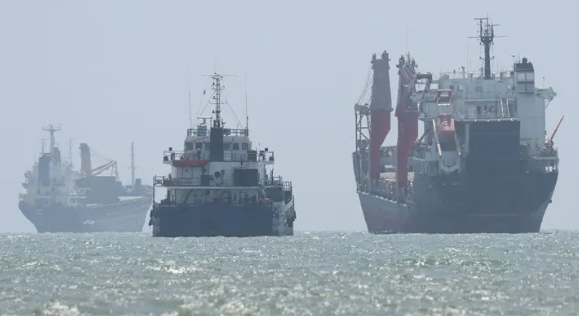
During his visit to Tehran, Omani Foreign Minister Badr Al-Busaidi secured an agreement with Iran on a phased approach to restoring navigation through the Strait of Hormuz.
Under the joint understanding, the two sides agreed on a temporary joint navigation corridor, mine clearance, information sharing and traffic management. Technical negotiations will continue on establishing a permanent navigation arrangement.
Al-Busaidi said he hoped the temporary corridor would be announced soon, with longer-term arrangements to be worked out later.
The technical talks will focus on establishing a permanent navigation corridor, determining future management of the strait and developing mechanisms for information sharing, traffic control and navigation and security services.
The development came as US President Donald Trump claimed on Truth Social that all mines had been removed or destroyed in international waters of the Strait of Hormuz.
Trump also warned Iran that any attempt to lay new mines would result in their immediate destruction, saying a “zero tolerance” policy was in effect.
Meanwhile, Reuters reported that Washington had begun returning personnel to some US diplomatic missions in the Middle East that had been evacuated or reduced during the escalation with Iran.
The move suggests the US government believes the immediate risk of further escalation has declined, although some diplomatic missions are expected to initially operate with reduced staff.