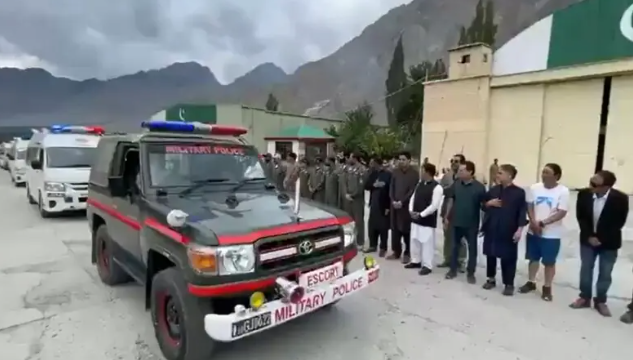
Gilgit-Baltistan Chief Minister Hussain has constituted a committee to review trekking and mountaineering regulations following a deadly avalanche on Broad Peak and several other fatal incidents in the region this year.
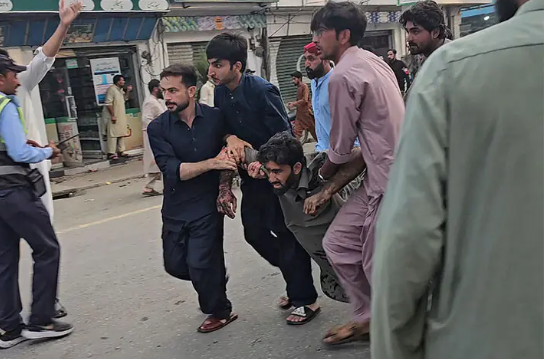
The 10-member expedition members were part of a team led by renowned British-Nepali mountaineer Nirmal Purja. They were hit by an avalanche on July 30, with Purja’s company later confirming that there were no survivors.
CM Hussain expressed concern over a series of mountaineering accidents this year that claimed the lives of 13 foreign climbers, including two Pakistanis.
In another recent incident, 34-year-old Pakistani climber Asma Mushtaq died on Spantik Peak on Aug 20 while descending after suffering from high-altitude sickness. Her body was recovered by a ground team nearly 10 days later.
The committee has been tasked with reviewing existing procedures, terms and conditions, and standard operating procedures for responding to mountaineering emergencies. It will also determine responsibility for negligence or administrative lapses that may have contributed to delays in rescue operations.
Forest, Wildlife and Parks Secretary Subtain Ahmed will head the committee, while Information Technology Secretary Zameer Abbas and Baltistan Division Commissioner Kamal Khan will serve as members.
The chief minister directed the committee to conduct a clause-by-clause review of existing trekking regulations and identify provisions that are outdated, ineffective or incomplete. It will also examine any shortcomings in the response to the Broad Peak incident.
The review will cover permits and registration, mandatory briefing and debriefing sessions, responsibilities of liaison officers and mountain guides, safety equipment, porter wages and welfare, insurance, medical facilities, evacuation arrangements, communication systems and emergency response mechanisms.
CM Hussain also ordered a review of insurance coverage for liaison officers, guides and porters, stressing the need for realistic coverage that reflects current risks and rescue costs.
The committee will further assess search-and-rescue arrangements, helicopter evacuation, weather forecasting, early-warning systems, communications and emergency assistance in remote and restricted areas. It has also been directed to develop mandatory safety protocols to reduce the risk of fatalities.
The chief minister said that the growing popularity of trekking and mountaineering in Gilgit-Baltistan required an update of the classification of open and restricted zones, trekking routes and mountain passes in line with ground realities.
He also called for a digital permit and registration system, improved coordination among relevant institutions and periodic reviews of laws governing the trekking and mountaineering sector.
A source told Dawn that complaints had been submitted to the chief minister over alleged negligence and delays in recent rescue operations.
A government official familiar with the region’s tourism industry said the committee had identified violations of mountaineering rules by some tour operators during the expedition.
According to the official, some operators failed to arrange insurance for climbers and helicopters required for potential rescue operations. Under existing rules, tour operators are responsible for arranging ground rescue teams and helicopter insurance when such services are required.
The official also said some operators had failed to conduct mandatory briefing and debriefing sessions under the 1999 Trekking Rules.
The Alpine Club of Pakistan recently said search-and-rescue operations in the country largely depend on government resources and that Pakistan lacks a dedicated, properly established high-altitude rescue system.
The club said it was working with relevant authorities to develop an effective rescue framework and improve the country’s mountaineering infrastructure.
More than 2,200 foreign climbers and trekkers visited Gilgit-Baltistan between April and August this year, according to a senior official of the GB Tourism Department.
Deputy Director Tourism Sajid Hussain said foreign adventurers travelled to the region to scale some of the world’s highest peaks and trek through restricted areas, including K2, Nanga Parbat, Broad Peak, Gasherbrum-I and Gasherbrum-II.
Officials said foreign and domestic tourists were also visiting popular destinations across the region, while foreigners travelling to open-zone areas do not require permits.
The number of foreign tourists visiting Gilgit-Baltistan’s tourist destinations and open zones during the spring, summer and autumn seasons is expected to exceed 10,000 this year, officials said.
Sajid Hussain said the number of foreign adventurers visiting GB during the current summer season was higher than last year.
As of June 30, the GB government had collected Rs350 million in expedition and trekking permit fees during the summer season.
The committee has been directed to submit a comprehensive report, recommendations and draft amendments to the relevant laws and SOPs within 15 days. However, it has not yet submitted its report.