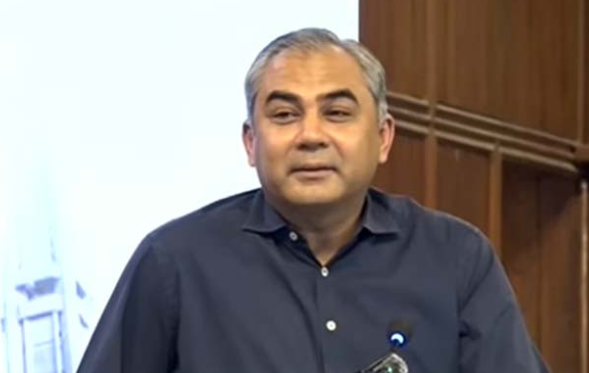
LAHORE: Interior Minister Mohsin Naqvi has said any decision to create new administrative units in the country must be based on political consensus and the consent of the people, stressing that no individual, political party or government could impose such a change unilaterally.
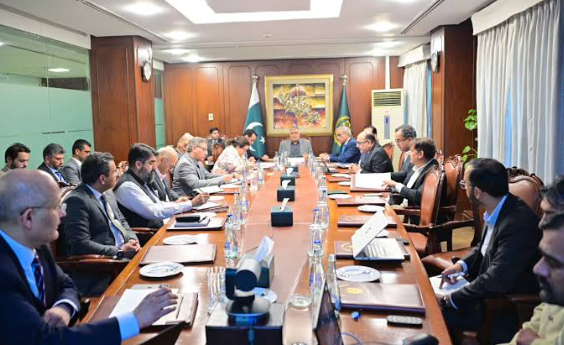
Addressing the National Policy Dialogue in Lahore, Naqvi clarified that his call for a “reset” of the system did not mean dismantling it, but reforming areas that were no longer functioning effectively.
“Reset does not mean breaking the system. Under no circumstances does it mean breaking the system. It means that whatever is wrong should be changed,” he said.
The minister said any administrative restructuring should be carried out through democratic and constitutional means. He called for political parties, parliamentarians and experts to examine the advantages, disadvantages, financial implications and territorial considerations involved in creating new administrative units before seeking the public’s opinion.
“If this is what the public wants, then it will happen no matter what,” Naqvi said, reiterating that the decision could not be made by one person, one province or a single political party.
He said the proposed reforms were aimed at improving governance and bringing government institutions closer to citizens rather than undermining regional, linguistic or cultural identities.
“A Sindhi will remain Sindhi and a Punjabi will remain Punjabi. No one will be asked to surrender their identity,” he said.
Naqvi argued that Pakistan’s existing administrative system had lost much of its effectiveness and that government policies and plans were not translating into adequate results for the public.
He cited shortcomings in education, access to clean drinking water and the judicial system as examples of persistent governance challenges. According to the minister, four out of every 10 children were not receiving the education they needed, only 55 per cent of the population had access to clean drinking water, and around two million cases remained pending in courts.
“These are the issues that we are trying to rectify,” he said.
Naqvi also described himself as a strong supporter of making Islamabad a province, arguing that the federal capital should receive its due share under the National Finance Commission (NFC) Award.
He claimed Islamabad was the only city that did not receive a direct share from the federal budget and said provincial status could help provide its residents with greater representation and resources.
The minister also questioned whether the population-based distribution mechanism under the NFC Award required reform, describing the existing arrangement as an incentive for provinces.
He said the proposed changes should ultimately focus on improving service delivery rather than merely altering administrative boundaries.
“Governments keep changing; policies keep changing; budgets come and go; and we keep making plans. But the biggest issue is how much we are able to deliver in the end,” Naqvi said.
Citing New York City Mayor Zohran Mamdani as an example, he said mayors were often better positioned to understand local problems because of their proximity to citizens.
Naqvi said the proposed administrative reforms should not be viewed through generational, tribal or regional divisions. Instead, he said, the objective should be to establish a more competent system and bring people closer to government.
He reiterated that he would continue advocating for the reforms despite opposition and political debate, stressing that the matter required serious deliberation among all political parties.
Meanwhile, Istehkam-i-Pakistan Party (IPP) President Abdul Aleem Khan welcomed Planning Minister Ahsan Iqbal’s views on the creation of new provinces, describing the growing political debate on the issue as a positive development.
In a post on X, Aleem said new provinces should be created on the basis of administrative needs and public convenience rather than linguistic or cultural considerations.
He said the issue was not the concern of any single political party but a national matter requiring serious discussion among political stakeholders.
Aleem maintained that political parties should work towards a logical conclusion instead of using the issue for political point-scoring.
He said provincial assemblies in Punjab and Khyber Pakhtunkhwa had already passed resolutions supporting the creation of new provinces, while Sindh had maintained separate rural and urban quotas since 1972.
According to Aleem, reorganising the country’s administrative structure could help improve governance and enable governments to respond more effectively to public needs.
He said Pakistan needed to modernise its administrative structure after nearly eight decades and reiterated the IPP’s support for the creation of Hazara province in Khyber Pakhtunkhwa.
The debate over new administrative units intensified after Naqvi proposed in July that political parties hold talks on governance reforms and the creation of new provinces.
His remarks triggered strong reactions, with the PPP referring the issue to its top decision-making forum, while Sindh Chief Minister Murad Ali Shah rejected the proposal. Lawyers in Lahore also described the suggestion as unconstitutional, while Sindhi nationalist groups called for Naqvi’s resignation.