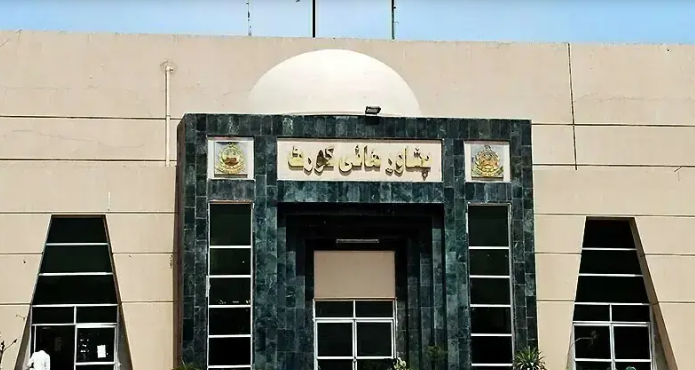
A Peshawar High Court (PHC) bench has once again sought responses from the provincial government and relevant officials over the alleged shortage of healthcare facilities in Upper South Waziristan.
The bench, comprising Justice Syed Arshad Ali and Justice Farah Jamshed, was informed by petitioners’ counsel, Sajjad Ahmad Mehsud, that the court had directed the respondents in June to submit their comments within two weeks. However, the required responses had not been filed.
The court subsequently reissued notices to the respondents, including the chief secretary, health secretary and director general of health services, directing them to submit their replies to a petition filed by residents of Upper South Waziristan.
The petition was jointly filed by several residents of Ladha tehsil, including Asifur Rehman and others. They have asked the court to declare the alleged denial of adequate healthcare services to the district’s population unconstitutional and a violation of fundamental rights.
The petitioners have also requested judicial directions to ensure the availability of qualified general and specialist doctors, including female medical professionals, along with essential medicines and medical equipment.
They further urged the court to order the government to make basic health units (BHUs), rural health centres and civil dispensaries fully operational, particularly in remote areas such as Karama.
Another key demand is the urgent establishment of medico-legal units and postmortem facilities within the district.
During the proceedings, Advocate Sajjad Mehsud explained that South Waziristan was previously a tribal agency within the erstwhile Federally Administered Tribal Areas (Fata) before 2018.
Following the merger of Fata into Khyber Pakhtunkhwa under the Constitution (Twenty-Fifth Amendment) Act, 2018, South Waziristan was granted the status of a settled district.
The lawyer said the provincial government subsequently divided South Waziristan into Upper and Lower South Waziristan through a notification issued in 2022.
He argued that the establishment of Upper South Waziristan created a constitutional and legal obligation for the authorities to develop essential public infrastructure, including administrative offices, law-enforcement facilities and, most importantly, a fully operational District Headquarters (DHQ) Hospital.
However, he maintained that despite considerable time passing since the district’s formation, the government had failed to establish a DHQ hospital, leaving residents without access to essential healthcare services.
According to the petitioners, the existing medical infrastructure consists of only a limited number of BHUs and small health centres, many of which are either non-functional or severely under-resourced. They alleged that these facilities lack qualified medical staff, essential medicines and basic equipment.
The counsel also highlighted the absence of medico-legal services, postmortem units and medico-legal officers in the district. As a result, families are reportedly forced to transport deceased relatives to other districts for postmortem examinations, causing delays, compromising forensic evidence and creating difficulties in the administration of justice.
He further told the court that residents facing medical emergencies often have to travel between five and seven hours to reach Dera Ismail Khan, while reaching Peshawar can take around 14 to 15 hours.
The petitioners argued that these long journeys, combined with the absence of timely medical assistance, frequently put patients’ lives at risk and can result in preventable deaths during transportation.