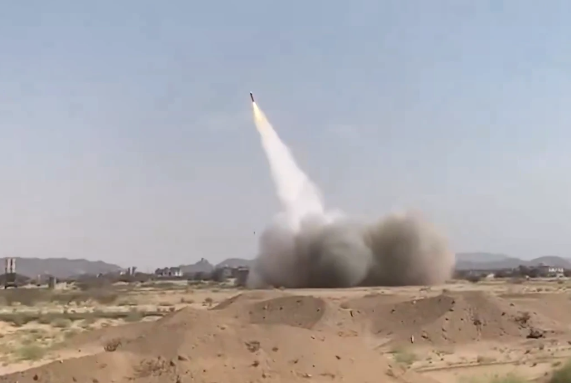
Saudi Arabia’s air defence systems intercepted several missiles and drones on Tuesday as regional officials held discussions in Tehran aimed at reducing escalating tensions across the Middle East.
The Coalition to Restore Legitimacy in Yemen said Saudi air defences intercepted and destroyed three ballistic missiles heading towards the Kingdom’s Eastern Province.
In southern Saudi Arabia, four drones targeting the region were also intercepted, according to coalition spokesperson Major General Turki Al-Maliki.
Saudi Civil Defense issued alerts for the Eastern Province and Al-Kharj at around 3am local time on Tuesday before subsequently announcing that the threat had passed.
The latest developments come amid heightened regional tensions and continued hostilities involving Yemen’s Iran-backed Houthi movement. The group has targeted Saudi Arabia following its announcement of a blockade affecting Saudi oil exports through the Red Sea.
Saudi Arabia has supported Yemeni government forces in their efforts to recover territory held by the Houthis, who have sought to expand their influence over strategic maritime routes, including the Bab Al-Mandab Strait.
Iran, which supports the Houthis, has also been involved in escalating tensions around the Strait of Hormuz following the war launched against Iran by the United States and Israel on February 28.
The Houthis have previously carried out attacks against civilian and energy infrastructure in Saudi Arabia. The report also cited a deadly strike on Riyadh’s King Khalid Airport that killed 13 travellers.
On Monday, Saudi Defence Minister Prince Khalid bin Salman met Iranian President Masoud Pezeshkian in Tehran during discussions involving Iranian officials and representatives of countries participating in the Makkah Joint Defense Agreement.
According to Iranian state media reports, participants agreed to continue dialogue following the initial meeting.
Pezeshkian expressed Iran’s willingness to pursue greater regional cooperation and resolve disputes through diplomatic engagement.
The discussions came as regional governments faced growing pressure to prevent further escalation and reduce the risk of a wider conflict.
Meanwhile, Yemen’s internationally recognised government said its forces carried out 1,276 strikes against Houthi targets within a 24-hour period on Monday.
Colonel Majed Al-Nuzaili said the operations targeted command-and-control facilities, defensive positions, reinforcements, supply and transport assets, as well as weapons and ammunition depots.
On the Taiz front, government forces, supported by the Popular Resistance, launched surprise attacks across several sectors alongside concentrated airstrikes, Al-Nuzaili said.
He stated that the strikes helped suppress Houthi fire, disrupt the movement of reinforcements and strengthen government positions on several hilltops and other strategically important locations.
The Houthis launched an offensive in July in an attempt to advance towards the Bab Al-Mandab Strait, a critical international shipping corridor for energy supplies and commercial goods.
Yemeni government forces subsequently pushed back against the advance, although intense fighting continues in areas surrounding Taiz.