Saudi Arabia and Egypt on Tuesday called for the freedom and security of maritime navigation in the Red Sea as Riyadh pledged a firm response to attacks by Yemen’s Houthi movement, which has taken control of the southern entrance to the strategic waterway.
Saudi authorities also issued emergency alerts in several cities, including Yanbu, Jeddah, Taif, Abha and Jazan, but lifted the alerts minutes later.
The latest escalation follows renewed fighting between the Houthis and Saudi-backed Yemeni government forces after Yemen’s civil war intensified in July.
In a rapid offensive last week, the Houthis seized control of Yemen’s Red Sea coastline and the Bab al-Mandab Strait, a strategically important maritime passage that has become increasingly significant for Saudi crude exports as the wider regional conflict disrupts shipping through the Strait of Hormuz.
Saudi Arabia has separately accused an Iran-aligned group based in Iraq of carrying out a Friday attack that disrupted the East-West Pipeline, one of the kingdom’s major oil transportation routes across the Arabian Peninsula.
Three sources said Saudi Arabia had also informed European customers that some crude oil shipments scheduled for late September would be cancelled. Saudi Aramco did not comment on the report.
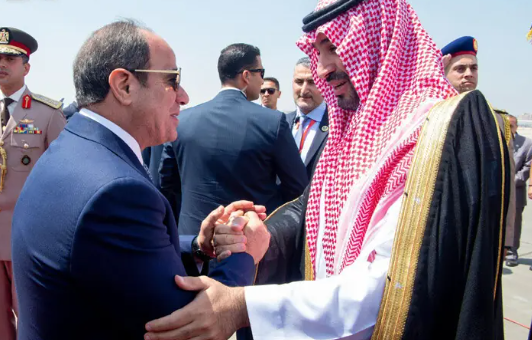
Saudi Crown Prince Mohammed bin Salman met Egyptian President Abdel Fattah al-Sisi in Cairo on Tuesday to discuss the escalating situation.
Following the meeting, both leaders called for “ensuring the freedom and security of maritime navigation” through the Strait of Hormuz and Bab al-Mandab. Egypt also expressed support for measures taken by Saudi Arabia to protect its security and stability.
Reports last week said the Saudi crown prince had requested US intervention against the Houthis from President Donald Trump, but the request was reportedly not accepted.
The Houthis have said there is no threat to navigation through Bab al-Mandab except for Saudi vessels. However, continued attacks in the waterway could increase risks for commercial shipping and discourage vessels from using the route.
Any disruption to Bab al-Mandab could also affect Egypt because the Red Sea provides access to the Suez Canal, a major source of foreign revenue for the country.
Suez Canal revenues remain around half their level before the Houthis began attacking Red Sea shipping in 2023. The group said those attacks were carried out in support of Palestinians during the war in Gaza.
Qatar on Tuesday warned that the closure of Bab al-Mandab would have serious global consequences.
“The world is suffering enough with the closure of the Strait of Hormuz, so we cannot also afford to add the Bab al-Mandab into that equation,” Qatar’s Foreign Ministry official Ibrahim Al Hashmi told reporters.
A Saudi-led coalition fighting the Houthis confirmed that missile and drone attacks in three areas of Saudi Arabia on Monday injured 13 civilians.
The Houthis have also targeted Saudi oil infrastructure. The attacks have added pressure to global energy markets, with crude prices rising above $100 per barrel.
The Saudi-led coalition said it would respond firmly to attacks in order to protect the kingdom’s sovereignty and would take operational measures to deter what it described as a hostile approach by the Houthis.
The renewed fighting has further aggravated Yemen’s humanitarian crisis. The United Nations said on Tuesday that around 100,000 people had been internally displaced by the latest clashes, while thousands more had crossed the sea into Djibouti.
Yemen’s conflict dates back to 2014, when the Houthis seized control of the capital, Sanaa. Saudi Arabia intervened in 2015 at the head of a coalition supporting the internationally recognised Yemeni government.
A Houthi attack in western Yemen on Monday killed eight government soldiers, according to two military sources.
The Houthis said Saudi Arabia responded with more than 50 airstrikes, similar to the previous day’s operations. Despite the strikes, the Houthis have retained their recent territorial gains.
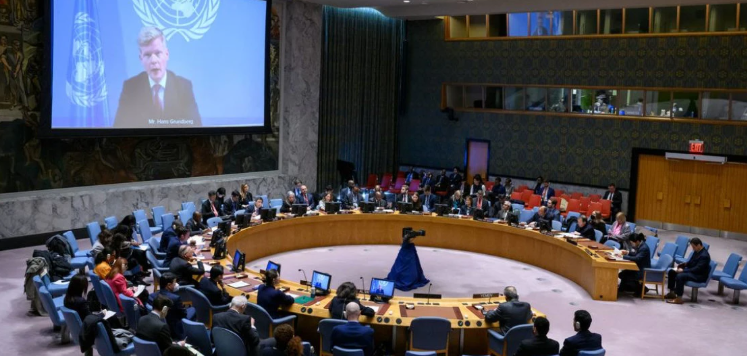
The United Nations Security Council was scheduled to meet on Tuesday to discuss the Houthi offensive, according to diplomatic sources.
Houthi politburo member Hazem al-Assad said the group’s military response would continue and intensify as long as Saudi Arabia continued what he described as aggression against Yemen.
The escalation comes as the broader Middle East conflict remains unresolved. US President Donald Trump said on Monday that he was open to talks with Iran.
Iranian security official Mohsen Rezaei, however, said Tehran would not enter negotiations until its conditions were met.
A planned meeting between Gulf states and Iran over the future of the Strait of Hormuz was postponed on Monday. Iran accused Saudi Arabia of using the Yemen conflict as a reason to delay the talks.
Iran has long supported the Houthis, providing the group with weapons and technology, although Tehran has denied involvement in the latest fighting.
Experts continue to differ over the extent of Iran’s role in the renewed conflict.