
Fighting between Yemen’s Houthi rebels and government forces has drawn Saudi Arabia deeper into the conflict, with the Houthis announcing a maritime blockade against the kingdom and targeting Saudi-linked vessels in the Red Sea.
The latest escalation follows a rapid Houthi offensive last week in which the group claimed control over Yemen’s Red Sea coastline and the Bab al-Mandab Strait, a crucial maritime route for regional trade and Saudi oil exports. The development comes as the wider Middle East conflict continues to disrupt shipping through the Strait of Hormuz.
The Houthis have rejected Saudi Arabia’s claim that its forces intercepted a drone allegedly heading towards Makkah, describing the report as a “lie”. Houthi politburo member Hazem al-Assad said similar allegations had been made previously.
In response, the Saudi-led coalition warned that the security of Islam’s holiest sites and pilgrims constituted a “red line” and said it would take necessary measures against the Houthis.
The Organisation of Islamic Cooperation (OIC), a 57-member bloc of Muslim countries, also condemned what it described as a “heinous” attack.
Saudi authorities had issued brief alerts on Tuesday warning of possible attacks in Makkah and parts of the kingdom’s southern region bordering Yemen. The alerts came a day after ballistic missiles and drones launched from Yemen injured 13 people in southern Saudi Arabia.
Fighting intensified in July when the Houthis, who have controlled large parts of northern Yemen for years, launched a major offensive against forces loyal to the Yemeni government.
According to the United Nations, more than 82,000 people have been displaced from western Yemen since the beginning of September as renewed fighting continues.
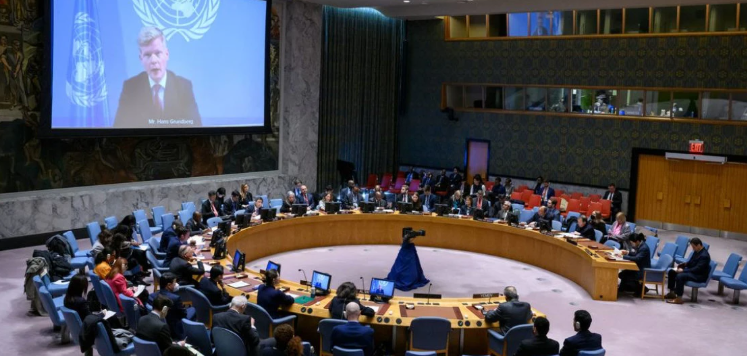
Yemen’s permanent representative to the United Nations, Abdullah al-Saadi, said government forces were seeking to restore national institutions across the country and urged the international community to take action against the Houthis.
Prime Minister Shehbaz Sharif strongly condemned what he described as an attempted drone attack targeting the Holy Site of Makkah Al-Mukarramah.
In a statement on X, Shehbaz said the Pakistani people were deeply saddened by the incident and praised the Saudi armed forces for their vigilance and response.
He also called on all sides to exercise maximum restraint and avoid further escalation, stressing that dialogue and diplomacy remained the only sustainable path towards peace.
The prime minister reaffirmed Pakistan’s support for Saudi Arabia’s sovereignty and territorial integrity and the security of the Haramain Sharifain.
Saudi Arabia and Egypt have called for the protection of maritime navigation in the Red Sea amid the escalating Houthi offensive.
Following talks in Cairo, Saudi Crown Prince Mohammed bin Salman and Egyptian President Abdel Fattah al-Sisi called for the freedom and security of maritime navigation through the Strait of Hormuz and Bab al-Mandab.
The renewed conflict has raised concerns in Riyadh as the Yemeni civil war, which had largely remained dormant since 2022, intensifies.
Reports last week said the Saudi crown prince had requested US intervention against the Houthis from President Donald Trump, but the request was reportedly rejected.
The Houthis have maintained that they do not pose a threat to shipping through Bab al-Mandab, except for Saudi vessels. Continued attacks could nevertheless make the waterway less attractive to international shipping companies.
Disruption in Bab al-Mandab could also affect Egypt, as the Red Sea provides access to the Suez Canal, a major source of revenue for Cairo. Suez Canal revenues remain significantly below levels recorded before Houthi attacks on Red Sea shipping began in 2023.
Qatar has warned that any closure of Bab al-Mandab could have severe consequences for global trade.
The Houthis have also targeted Saudi oil infrastructure, contributing to a rise in international crude prices above $100 a barrel.
The Saudi-led coalition has vowed to respond firmly to attacks and said it would take operational measures to protect the kingdom’s sovereignty.
Meanwhile, Houthi military spokesman Yahya Saree accused Saudi Arabia of carrying out 52 airstrikes in Yemen over a 24-hour period, claiming that civilian infrastructure, including schools and bridges, was among the targets.
Despite Saudi airstrikes, the Houthis have maintained their recent territorial gains.
A US military task force is also assisting Saudi forces with intelligence-sharing and planning support as Riyadh faces continued attacks, according to a US official.