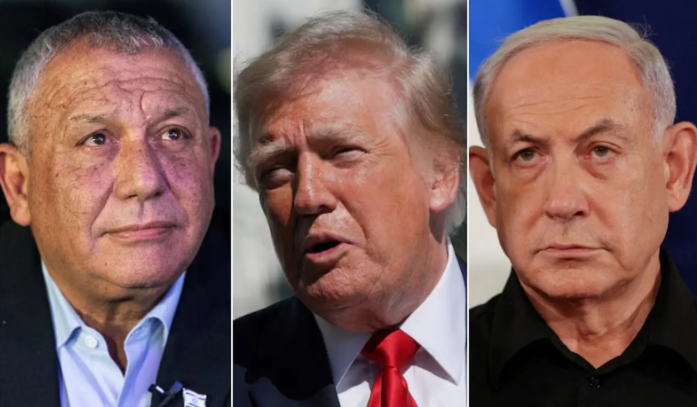
Israeli Prime Minister Benjamin Netanyahu’s right-wing alliance emerged as the largest bloc in parliament but failed to secure a majority in Tuesday’s election, despite receiving public backing from US President Donald Trump. The result has left Netanyahu and his main rival, former military chief Gadi Eisenkot, facing uncertainty over the formation of the next government.
Israel’s first election since the Hamas-led attacks of October 7, 2023, and the subsequent wars in Gaza, Lebanon and Iran has failed to produce a clear path to power for either side.
The outcome could lead to prolonged coalition negotiations or another election, with Netanyahu expected to remain in office as caretaker prime minister in the meantime.
The political uncertainty carries significant implications for US-Israeli relations, particularly as both countries remain focused on Iran, efforts to revive a stalled Gaza peace process and changing levels of American public support for Israel.
The deadlock has emerged at a sensitive time, with Trump and Netanyahu having raised the possibility of renewed joint military action against Iran.
Aaron David Miller, a former Middle East adviser who served under both Democratic and Republican administrations, described Israeli politics as complicated. He said greater political clarity would be helpful from Washington’s perspective, although achieving it might prove difficult.
Netanyahu, a veteran political figure with a long and occasionally strained relationship with Trump, has once again emerged as a central player in Israel’s political landscape. He is the country’s longest-serving prime minister and the only Israeli leader Trump has worked with during his presidency.
Eisenkot, a former military chief who presented himself during the campaign as an outsider focused on national security, has seen his chances of forming a government weaken, although they have not disappeared entirely. He is not known to have met Trump.
Some analysts believe a broad unity government that keeps Netanyahu in office could provide Trump with a more stable Israeli partner. However, neither political camp has demonstrated a clear willingness to pursue such an arrangement.
Asked whether he would intervene to encourage the formation of a unity government led by Netanyahu, Trump told Axios on Wednesday that he had not considered the possibility but would examine it.
One of the most significant questions for Washington is how Trump will approach the conflict with Iran, which has destabilised the Middle East and disrupted global energy supplies.
The eight-month-long conflict has contributed to higher US petrol prices and declining approval ratings for Trump, creating additional political pressure ahead of the November 3 midterm elections. Republicans are facing the possibility of losing control of one or both chambers of Congress.
In an endorsement issued on October 18, Trump urged Israeli voters to keep Netanyahu in power, saying the Israeli leader could help him “finish the job” against Iran.
Following the election, Trump said Netanyahu had performed “very well” and claimed his support had strengthened the prime minister’s position.
Trump has repeatedly suggested that Washington and Israel could resume attacks on Iran after the US midterm elections. Some critics, including within Israel, have raised concerns that Netanyahu could view renewed military action as a way to strengthen his political standing while serving as caretaker prime minister.
Jonathan Panikoff, a former US deputy national intelligence officer for the Middle East who now works at the Atlantic Council, said any future Israeli government would likely share Trump’s position if the US president decided to escalate the confrontation with Iran.
Panikoff said there was little reason to expect a major divide between the two countries over such a decision.
However, Netanyahu and other Israeli leaders have occasionally differed with Trump when he has shown willingness to make concessions during negotiations with Tehran, which have now stalled.
Regardless of which political arrangement eventually emerges, analysts see limited prospects for a major shift in Israel’s hard-line policies towards Palestinians.
The election outcome could therefore complicate efforts to break the diplomatic deadlock between Israel and Hamas and implement Trump’s Gaza peace plan.
Israel launched its military campaign in Gaza following the October 2023 attacks, devastating large parts of the territory and killing tens of thousands of Palestinians.
US officials have privately expressed frustration over what they regard as Netanyahu’s unwillingness to compromise, particularly his insistence that Hamas must disarm before further progress can be made.
Eisenkot, who lost a son and two nephews during the Gaza war, emphasised his military background while presenting himself as a centrist on domestic issues.
He has pledged to distance himself from Netanyahu’s far-right coalition partners but has not proposed a fundamental departure from Israel’s security-focused approach since the 2023 attacks.
Like Netanyahu, Eisenkot opposes Palestinian statehood and supports the destruction of Hamas’s military capabilities.
However, he has also promised to take action against violence by Israeli settlers targeting Palestinians in the occupied West Bank. Netanyahu’s government has faced criticism over its handling of such incidents.
Settler violence has become a growing concern for US officials, who have warned that escalating tensions in the West Bank could create another major flashpoint in the region.
The political uncertainty in Israel comes as Trump faces growing domestic challenges over his administration’s Middle East policies.
Opinion polls ahead of the November midterms have suggested that Democrats could gain control of one or both chambers of Congress. Such a shift could intensify pressure on the administration to reconsider billions of dollars in US military assistance and weapons supplies to Israel.
Some members of Trump’s Make America Great Again (MAGA) political base have also become increasingly critical of Israel. They have questioned whether Israeli officials overstated the ease with which Iran could be defeated, despite Trump’s campaign promise to avoid foreign military interventions.
In a June interview with Axios, Trump expressed concern about Israel’s growing international isolation.
Analysts say the country’s deteriorating global standing could remain a significant challenge regardless of the outcome of its coalition negotiations or the formation of a new government.
For Trump, the Israeli election deadlock creates uncertainty over a key regional partnership at a time when the Iran conflict, Gaza peace efforts and domestic political pressures are increasingly interconnected.